
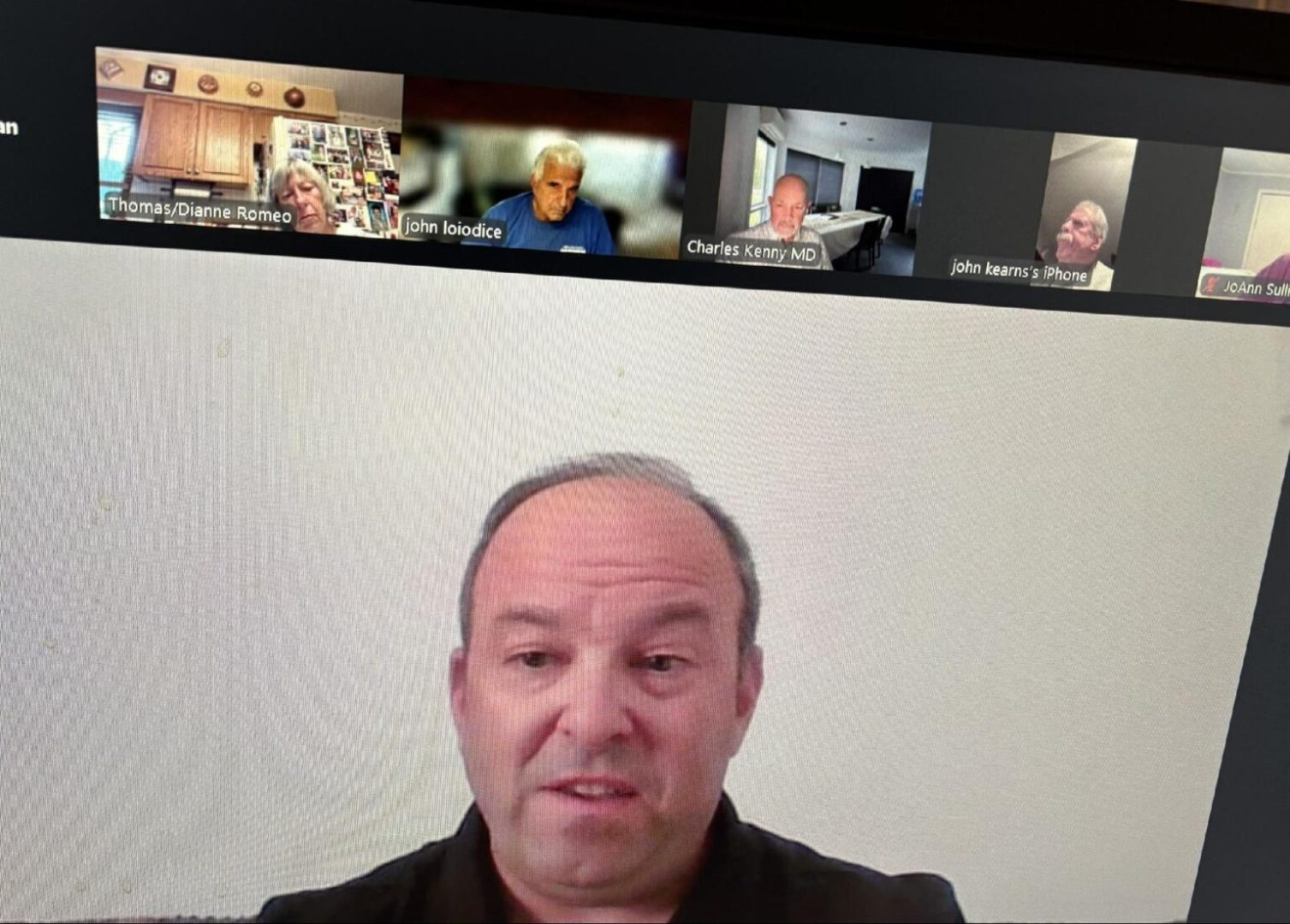
The Tri-Town Boards of Health (Tri-Town) agreed September 16 to host a public hearing on the group’s draft tobacco regulations that include a substantial change from existing policies regarding age restrictions for buying tobacco as well as oral tobacco pouches. Tri-Town represents the boards of health of Lee, Lenox, and Stockbridge.
In April, the group heard a presentation from lecturer and primary care pharmacist Anthony Ishak explaining the Nicotine-Free Generation (NFG) concept that places restrictions on retailers within a town or city to deny selling commercial tobacco products—cigarettes and vapes—to anyone who was 21 years old or older on the regulation’s effective date. That date is left up to individual municipalities and the program results in a gradual phase out of nicotine products.
For example, if Tri-Town chose the date of action as January 1, 2006, retailers could only sell tobacco products to individuals who were at least 21 years old and born before January 1, 2006, restricting sales to everyone else. Proponents tout the measure as easily enforceable with a retailer’s check of identification for a potential buyer of the products.
Tri-Town’s proposed regulation can be found here, and the major changes in the regulation are highlighted in green. According to Tri-Town Executive Director James Wilusz, the date cited of January 1, 2028, is merely a placeholder, with the group to determine the effective date for the policy. A hearing on the measure will most likely be scheduled no later than February, Wilusz stated, and the session “will allow many people to testify and speak, submit more information data, and go on the record.” Board members will then decide whether to ratify the changes.
According to background materials compiled by Wilusz, which cite a CDC Foundation brief based on data collected from August to December 2025, one in 10 youths and one in four young adults currently use tobacco products, with most of those products cited as e-cigarettes. Additionally, current tobacco use among that young population is greater for those living in rural areas than in urban regions.
Locally, boards of health such as Tri-Town regulate tobacco and vape products. “Tri-Town has pretty solid tobacco regulations already on the books,” Wilusz said. The group caps the number of permits allotted to commercial sellers and doesn’t allow flavored products. NFG ordinances exist in other countries as well as 28 municipalities within the Commonwealth, with Brookline being the first to pass the regulation, Wilusz said. “It’s a topic that keeps coming up in the board of health realm, in trainings and seminars and conferences,” he said. “I was asked to update those draft regulations and present them to the boards.”
The public hearing will allow speakers to argue the merits on both sides of the proposal. Although Stockbridge Board of Health representative Rae Williams touted the NFG idea as “a great thing,” she advocated that the growing number of cannabis retailers “just seems like an oxymoron, a conflict of interest.” “We’re going to ban one but then they can go get another,” she said.
Lee Board of Health’s JoAnn Sullivan agreed and questioned the ability of the group “to legislate morality.” “There’s a part we’re missing,” she said. “There’s so many other things [kids] can get into. There’s like 8 million pot shops around here. So, we’re going to not have them have that but they’re going to be out going to pot shops and getting pot and smoking pot and driving around in cars and motorcycles. So, we’re making a healthier choice? I just have a problem with the whole thing. Regulating morality is a very fine line. You walk on a fence, you fall one way, you fall the other, and I don’t think that we can regulate every morality there is in life…. You can not want smoking. You can make it hard for them to get cigarettes. I get it, but this feels like an overreach of government.”
Although board member Robert Wespiser, of Lee, admitted to initially having “some problems taking away a right forever,” his thoughts changed after doing more research, including England’s implementation of the concept across the country. He noted balancing “the careful way [NFG] is initiated over time” and local lung cancer rates in Lee as double that of the state, with Lenox harboring a 20 percent higher lung cancer rate than the state. “Only one in 20 new smokers starts after the age of 24, and the age of 21 is arbitrary,” Wespiser said. “One point after another seem to erode my feeling that we’re taking a major moral decision away from our youth.”




One Response
Why Smokers Prefer Cigarettes Buy Online Free Shipping Over Light Variants in USA.(https://cigarettesbuyonlinefreeshipping.com)