The Problem
Nicotine addiction is the leading cause of preventable death in the world. It kills 8.7 million prematurely each year, and unless policies change, it is projected to claim one billion lives this century. While tobacco-related deaths in the United States, still nearly 500,000 annually, are slowly declining, global nicotine use is accelerating, driven by aggressive industry expansion and weak protections for adolescents.
Nicotine addiction is not an adult choice; it is a pediatric disease with lifelong consequences. Nearly 95% of smokers begin before age 21, and four in five start before 18. Once addicted, most users want to quit but cannot. Prevention during adolescence is therefore not optional; it is the single most effective, long-term intervention.

Nicotine & The Developing Brain
Teenagers are the canaries in the coal mine, signaling the emergence of the next generation of nicotine-dependent adults and the wave of premature illness and death that follows. Today’s epidemic is no longer defined by a single product. It is driven by a rapidly evolving marketplace of disposable e-cigarettes, flavored nicotine pouches, and other high-nicotine devices engineered for rapid addiction.
Decades ago, an R.J. Reynolds executive captured an uncomfortable truth:
“If a man has never smoked by age 18, the odds are three-to-one he never will. By age 24 the odds are twenty-to-one.“
We now understand the neurobiology behind that statement and why nicotine, regardless of delivery system, is uniquely effective at creating lifelong addiction.


Nicotine is delivered to the brain with extraordinary speed and efficiency. Inhalation exposes it to the vast internal surface of the lungs, nearly the size of a singles tennis court, richly supplied with blood vessels designed to absorb oxygen instantly. Nicotine exploits this system perfectly. Within seconds, nicotine-laden blood reaches the brain at high concentration, unfiltered and potent. Few drugs, legal or illegal, reach the brain more quickly.
Once there, nicotine forcefully activates receptors that release of dopamine, the brain’s primary reward neurotransmitter. Dopamine drives feelings of focus, confidence, alertness, and mild euphoria. But the brain seeks balance. Repeated overstimulation causes dopamine receptors to down-regulate, becoming less sensitive not only to nicotine, but also to everyday sources of reward such as food, physical activity, social connection, and pleasure.
As this process unfolds, the brain’s new normal depends on nicotine just to achieve baseline. The only reliable way to restore dopamine balance becomes another dose. In smoke-free schools, workplaces, and public spaces, this creates repeated cycles of withdrawal marked by irritability, anxiety, depressed mood, and impaired concentration. Smokers and vapers report that nicotine relieves stress. This is true only because it temporarily corrects the stress that nicotine itself has created.
Teen brains are especially vulnerable. Their neural circuits are still developing and are far more plastic, adapting faster, more deeply, and more permanently to chemical stimulation. At the same time, adolescents are biologically primed for risk-taking and independence. This combination places them squarely in the crosshairs of those who profit from nicotine addiction.


Nicotine acts on some of the brain’s most ancient central regions, where receptor changes ripple throughout the nervous system. This helps explain why teens who use nicotine show higher rates of depression, impulsivity, risk-taking, and behavioral problems. Early exposure, whether through cigarettes, e-cigarettes, or nicotine pouches, carries lasting consequences.
A growing body of evidence also links early nicotine addiction to increased vulnerability to other substance use and to serious mental health disorders, including depression, bipolar disorder, and schizophrenia in susceptible individuals. Disruption of dopamine regulation during this critical developmental window may have lifelong effects.
Preventing nicotine addiction is not simply a matter of individual choice. It is a matter of brain development, public health, and policy. The stakes could not be higher.
The Vaping Epidemic: Regulatory Negligence in Plain Sight
Electronic cigarettes, commonly called vapes, entered the U.S. market around 2010. Early products followed a familiar arc: a brief surge of adolescent curiosity, followed by decline as novelty faded and bulky, inconvenient devices lost appeal. Had that trajectory continued, vaping might have remained a minor public health footnote.
It did not.
In 2015, JUUL entered the market as a Silicon Valley startup and fundamentally changed the nicotine landscape. JUUL introduced a new device design, USB-style recharging, and a chemically altered form of nicotine that was easier to inhale and far more addictive. Most consequentially, it unleashed an unprecedented wave of social media marketing aimed squarely at teens.
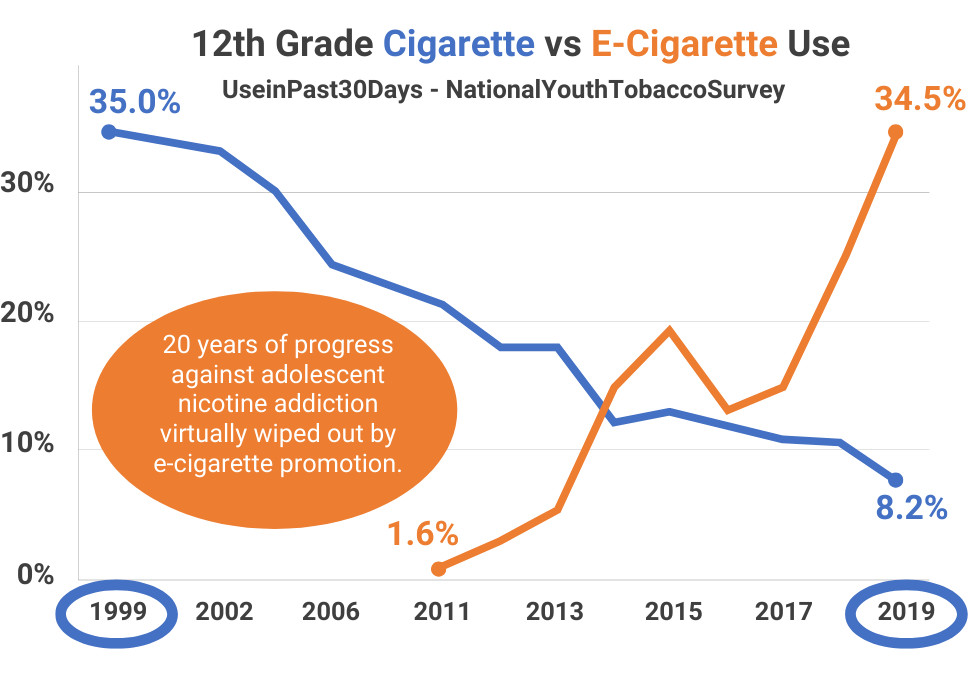

Between 2016 and 2018, JUUL rapidly grew from a niche product into the dominant e-cigarette brand in the United States. By late 2017, it controlled the majority of the market. Sales increased more than 600 percent in a single year. High school vaping rates surged in parallel. Two decades of progress in reducing adolescent nicotine addiction were effectively erased.
This was not accidental. JUUL’s sleek design enabled discreet use in classrooms. Its flavors masked nicotine’s harshness. Its marketing normalized and glamorized use among teens. The result was a textbook example of commercial exploitation of adolescent vulnerability, on a national scale.
How Did This Happen?
The most disturbing fact is that it should not have happened at all.
Federal law prohibits new nicotine and tobacco products from entering the U.S. market without prior authorization from the Food and Drug Administration. JUUL and its competitors never received that approval. These products were illegal from the start. Yet the FDA chose not to enforce the law.
In a catastrophic regulatory miscalculation, federal authorities allowed these products to remain on the market, hoping they might help adult smokers quit. The evidence now shows that hope was misplaced. E-cigarettes have not proven effective as cessation tools at the population level. What they have done, overwhelmingly and predictably, is addict teens.

Flavors are central to this strategy. Mango, cotton candy, blue raspberry, strawberry milkshake, cola, bubblegum, and dessert flavors are not designed for hardened adult smokers. They are designed to recruit new users, mask nicotine’s bitterness, and facilitate initiation.
For many teens, vaping begins with a single puff from a friend’s device. That experiment quickly becomes a habit. The pharmacology does the rest.
Engineering Addiction
JUUL did not simply repackage nicotine. It modified it.
By adding benzoic acid, manufacturers created “nicotine salts,” a less acidic compound that is smoother to inhale and less irritating to the throat. This innovation allows higher nicotine concentrations to be delivered with less immediate discomfort, making the drug more tolerable to inexperienced users with no prior nicotine exposure.
In other words, the product was engineered to lower the barrier to adolescent initiation.
That this occurred under the supervision of federal regulators is not merely unfortunate. It represents regulatory failure of the highest order. Ironically, this same modification reduced the product’s effectiveness as a smoking cessation tool. Nicotine salts delivered at lower temperatures cannot match the rapid nicotine delivery of combustible cigarettes. Adult smokers who try to switch often do not succeed.
The Illusion of Reform
Public outrage eventually followed. Parents, teachers, physicians, and teens themselves demanded action. In 2019, Congress passed, and President Trump signed, a budget bill that raised the legal sales age to 21 nationwide and restricted flavors in cartridge-based products such as JUUL.
These policies worked. High school vaping rates dropped by roughly 60 percent over the next two years. But the damage was already done. Millions of teens and young adults were addicted, and the nicotine industry adapted quickly.
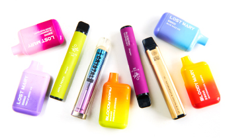
Smaller manufacturers exploited regulatory loopholes by shifting from cartridge-based products to flavored disposable vapes. Brands such as Puff Bar, Elf Bar, Geek Bar, RAZ, and Lost Mary flooded the market. These products are also illegal. None have FDA authorization. Yet they now dominate retail shelves in the United States and markets around the world.

JUUL
- 200 Puffs per pod (equivalent to 1 pack of cigarettes)
- 2 Flavors (tobacco & menthol)
- 5% Nicotine (Salt)
- Circa $5 per pod (cartridge)
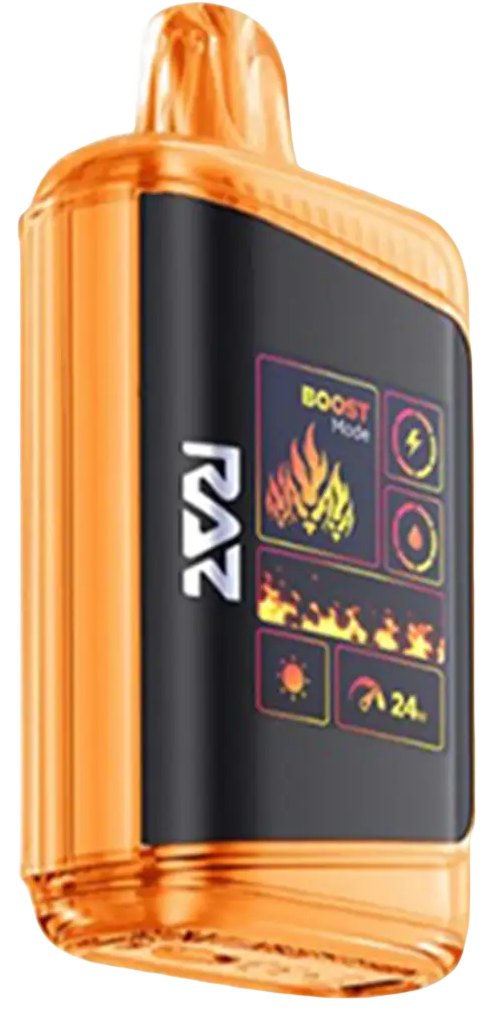
RAZ
- 25,000 Puffs (equivalent to 12 cartons of cigarettes)
- 15 Flavors
- 5% Nicotine (Salt)
- HD Smart Screen
- Illegal in U.S
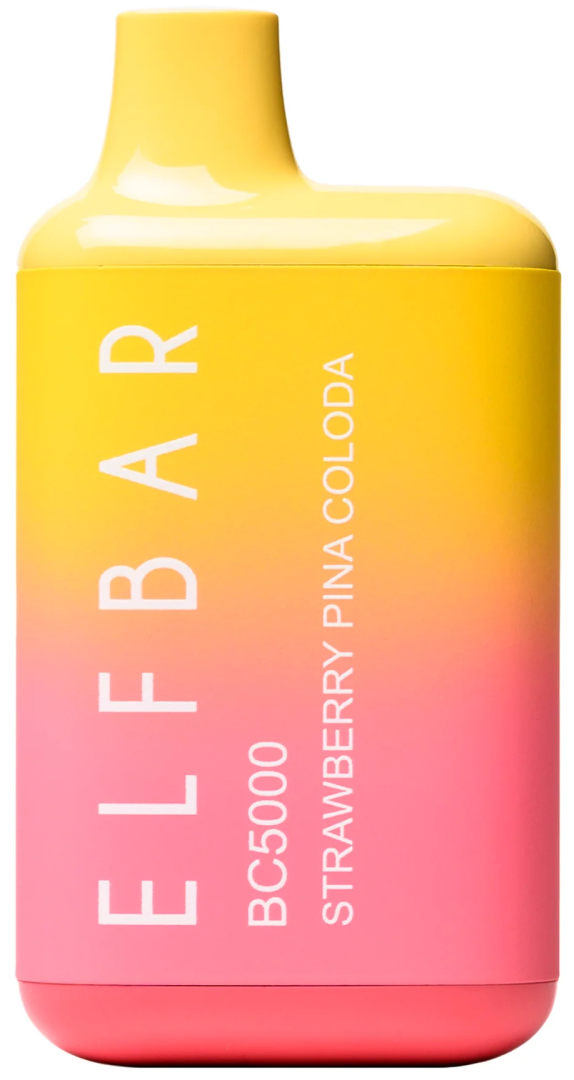
ELFBAR
- 5,000 Puffs (equivalent to 2.5 cartons of cigarettes)
- 40 Flavors
- 2-5% Nicotine (Salt)
- Circa $12
- Illegal in U.S.

LOST MARY
- 35,000 Puffs (equivalent to 17 cartons of cigarettes)
- 30 Flavors
- 5% Nicotine (Salt)
- Circa $20
- Illegal in U.S.

GEEK BAR
- 25,000 Puffs (equivalent to 12 cartons of cigarettes)
- 148 Flavors
- 2-5% Nicotine (Salt)
- 3D Curved LED screen
- Circa $23

VUSE ALTO
- 300 per cartridge (equivalent to 1.5 packs of cigarettes)
- 2 Flavors (tobacco & menthol)
- 5% Nicotine (Salt)
- Circa $7 per pod (cartridge)
- Approved by the FDA (for ??)
Why Teens Vape
The answer is simple: flavors.
Brightly colored devices offering dozens, or hundreds, of flavors are designed to appeal to adolescent tastes. Teens are drawn in by sweetness and novelty, not by nicotine itself. At first, many barely register the drug they are consuming. They feel a mild buzz. Then tolerance develops. Then dependence.
This is not accidental. It is the business model.
A Familiar Pattern
There is a troubling parallel to the opioid crisis. Products like JUUL, Geek Bar, and RAZ function as a starter addiction system, akin to Oxycodone. Combustible cigarettes, with their rapid nicotine delivery, are the equivalent of heroin.
Just as few heroin users revert to prescription opioids once addicted, most smokers do not fully switch to e-cigarettes. Instead, many become dual users, smoking when they can and vaping when they must. This dual use does not reduce health risks and may compound them, exposing users to both the well-established harms of cigarettes and the largely untested risks of flavored vaping products.

The Bottom Line
This epidemic was not inevitable. It was enabled.
Regulatory inaction allowed an illegal, youth-targeted nicotine delivery system to flourish. The result has been widespread adolescent addiction, sustained by flavors, stealthy devices, and weak enforcement. Until federal regulators fully enforce existing law and remove illegal products from the market, the cycle will continue, and another generation of teens will pay the price.

Pouch Mouth
As teen vaping has slowed, nicotine pouches have surged in popularity, particularly among older teens and young adults. Early momentum came from social media, where the brand Zyn was promoted by conservative commentator Tucker Carlson, who praised it as a productivity aid and even a male-potency enhancer. Sales tripled between 2021 and 2024, signaling how quickly this product category has embedded itself in youth culture.


Nicotine pouches are typically sold as small white, pillow-shaped sachets, measuring roughly 30 × 12
× 4 mm (about 1.2 × 0.5 × 0.2 inches). They are made of cellulose and filled with either synthetic nicotine or highly purified tobacco-derived nicotine. A container of 15 pouches usually retails for $3-6, making them inexpensive and easy to access. Some manufacturers chemically modify nicotine into less bitter nicotine salts, while others raise the pH with bicarbonate to deliver a more intense free-base nicotine experience. Products are sold in a wide range of strengths, from 1.5 mg to 12 mg of nicotine per pouch.
Nicotine absorption from pouches resembles that of cessation products such as nicotine gum or lozenges, but differs markedly from cigarettes and vaping. Cigarettes deliver a rapid arterial spike within seconds, while e-cigarettes typically peak within two to three minutes. Nicotine pouches absorb more slowly, reaching peak blood levels at 10-20 minutes, followed by a prolonged taper lasting hours. Importantly, total nicotine exposure is comparable across cigarettes, vaping, and pouches.
Regular users commonly place a pouch under the upper lip 8-12 times per day, creating a near steady-state level of venous nicotine. Transmucosal absorption bypasses much of first-pass liver metabolism, and the absence of tobacco leaf reduces the harsh burning sensation long associated with snus or spit tobacco.
Nicotine pouches require no spitting and little visible behavior, making them exceptionally discreet. Still, a subtle bulge beneath the upper lip is often noticeable and, among users, can function as a quiet signal of membership in the so-called “Zyn brotherhood.”

The Wages of Zyn


What remains largely unknown, simply because widespread use is so recent, is the long-term health risk of nicotine pouches. Over the past two decades, Swedish health authorities have encouraged smokers to switch to a similar tobacco-based product, snus, as a harm-reduction strategy. Large population studies in Sweden suggest little or no increase in oral cancer or cardiovascular risk among adult users. This contrasts with findings from the United States and many other countries, where traditional oral tobacco products are clearly associated with oral cancers and cardiovascular disease.
What is already clear is that the tissue where pouches repeatedly contact the upper lip and gums develops distinctive and sometimes striking changes, often referred to as “pouch mouth.” Early findings include thickened white patches, known as leukoplakia, and gum recession at the site of placement. Nicotine is a powerful vasoconstrictor, and chronic exposure likely compromises microcirculation in the gums, impairing tissue health and repair.
More uncertain, but potentially far more consequential, is the effect of sustained, high-level nicotine exposure on young brains. What does constant neural nicotine do to emotional regulation, attention, and stress response during adolescence and young adulthood? How might it shape vulnerability to future substance use disorders?
Nicotine pouches may look clean, modern, and harmless.
The mouth, and the brain, may be telling a very different story.